This is the first of two reflections in, and for, Holy Week, both of which are adapted from my notes on Neville Ward’s Five for Sorrow, Ten for Joy; his writings on the mysteries of the rosary are both profound and curious, in that they were written by a prominent Methodist.
Good Friday is the day we stand at the foot of the cross, not as spectators, but as participants in the mystery of Christ’s suffering. We remember his cry of dereliction, and his final act of trust: “Father, into your hands I commit my spirit.” This day invites us to enter into the world of suffering—not to flee from it, but to find meaning within it.
Suffering is the commonest reason people turn away from God and life. Yet, Christian faith does not promise to remove suffering; it promises to transform it. The remembering of Christ’s sacrifice in the Eucharist, the gaze at the crucifix—these are not just rituals. They are exercises in learning to take suffering and, by God’s grace, make something of it.
When we pray, we do not just recall Christ’s suffering; we enter into it. We consider the pain cutting into our own lives or the lives of others. This deepens our fellowship with Christ and with one another. It sets our pain within God’s purpose and presence.
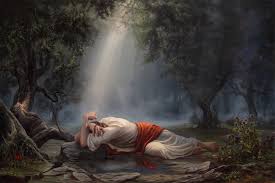
On the cross, Jesus cried out, “My God, my God, why have you forsaken me?” This was not a loss of faith, but faith lived to its depths. He trusted God even when it felt like God was absent. This is the heart of Christian endurance: not just to bear suffering, but to do something with it, to receive grace for the doing. We are called to ask, without anxiety and with gratitude, “What is God’s will in this?” and to be ready to learn.
Human beings differ in how we face suffering. Some, like Jesus, learn a flexibility of response that gives them an air of freedom and resource. Others, through fear, make expensive deals with life, reducing their chances of true living. But the Christian knows that even if the cup does not pass, it comes ultimately from the hand of God, who is with us to the last drop.
Do we think Christ was forsaken? No. We believe he entered into the only kingdom that matters—the kingdom of love and truth. On this Good Friday, let us resolve to live not in resignation or rebellion, but in trust. Let us ask for the grace to see our suffering as a mystery to be lived through in faith, hope, and love. And let us remember that, in the end, it does not matter who forgets us, as long as we are remembered there, in the only place that matters—in the kingdom of love.