
Twice in my teens I had the experience of hearing music – vinyl in those days – which opened doors into new sonic worlds. Now, half a century later, it has just happened for the third time.
The first time this happened I must have been about 14, and I had been invited with a bunch of much older boys up to the lab assistant’s flat, where we packed into a room of joss-sticks, psychedelic posters and dim orange light bulbs to listen to Tales of a Topographic Ocean. And while I don’t think Yes has ever been one of my favourite bands, that experience opened up a whole new and utterly magical musical experience.
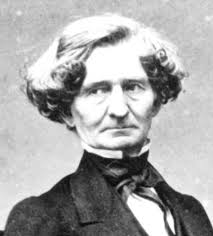
Then a few years later, when I was in the sixth form, we were invited to a tutorial with our history teacher, Brian Jenkins, and as we walked into his living room Berlioz’s Symphonie Fantastique was playing on the stereo. I was enraptured by the sound the pict-aural march to the scaffold, the clanging insistence of Dies Irae theme, and more mesmerised still when he told us the story of this piece of music: how this unknown, and thoroughly unprepossessing (hideously ugly might be a less kind but more accurate description) wannabe composer from the French provinces found himself at the theatre in Paris and fell in love with the Irish actress Harriet Smithson—and wrote the Symphonie Fantastique to impress her. It worked, but not immediately. Smithson ignored Berlioz’s advances for years, only realizing the symphony was about her in 1832, after attending a performance of its sequel, Lélio. They were married on October 3, 1833, at the British Embassy in Paris, with Franz Liszt as a witness. Their union was stormy and unhappy from the start, and they formally separated in 1844; but after she died Hector Berlioz wrote his other great masterwork in her honour, his Te Deum Mass.
Ones teens are the time to be blown away by works of art, and the music we come to love in those years tends to remain the soundtrack of our lives. But now, it has just happened again: not just discovering new music, but hearing something that opens up a whole new terrain of musical possibility. Straight off, I have to admit that the title of this new discovery will not inspire many of you to reach for your streaming button on your devices: ‘The Ordinary of the Mass’. I also need to confess that over the decades I have acquired a taste for both early English music and sacred music, and the composer John Dunstable ticks both boxes. But what I found myself listening to was not at all what I was expecting, because what I hadn’t noticed was the subtitle: Noël Akchoté (guitar). And it is Noël Akchoté who is the new musical epiphany.
A little bit of online research and I’ve come across the following description of his work:
“Noël Akchoté (b. 1968, Paris) is one of the most restlessly inquisitive guitarists to emerge from the European experimental and improvised music scenes. Starting out young on the Paris jazz circuit, he moved quickly from conventional guitar roles into a personal, often radical exploration of sound, harmony and form. His work sits at a crossroads where free improvisation, early music, pop, noise and studio craft constantly collide.
At the heart of Akchoté’s practice is the guitar itself: close‑miked, fallible, physical. On solo recordings such as ‘Adult Guitar’, he treats the instrument less as a vehicle for virtuoso display and more as a site of investigation. Notes splinter into noises, chords are left hanging, silences feel charged. What emerges is not minimalism in the strict sense, but a kind of stripped‑back intensity where every gesture counts.
A distinctive thread in his catalogue is his long‑running engagement with other people’s music. Akchoté has devoted entire albums to composers such as Carlo Gesualdo, John Dowland, Jean‑Philippe Rameau and Luciano Berio, as well as to Jewish liturgical songs and even the pop of Kylie Minogue. Rather than offering respectful “covers,” he reimagines this material, compressing complex polyphony or glossy chart hits into fragile, sometimes fractured guitar monologues. The result is both homage and critique: an exploration of how music survives translation across centuries, genres and technologies.”
However, none of this is a substitute for listening to his music, which I am only just beginning to discover for myself. Besides the John Dunstable album, can I recommend:“Adult Guitar”
“So Lucky” (Kylie Minogue songs)
“Gesualdo”
“Sonny II”