Good morning. I’d like to begin on a very personal note. Today is the last Sunday in August, and it was the last Sunday in August last year when I was licensed as your chaplain. So, as of today, I have officially been your chaplain for one year. I want to thank you all for your fellowship and friendship. It has been a true privilege to serve here among you.
It is also, by the way, the fifth Sunday in August. Now, one of the decisions I made during the last year, is to use the last Sunday of the month—when it happens to be a fifth Sunday—to hold a service of healing. These Sundays don’t come around often—only three or four times a year. We’ve only had a couple of these healing services so far, and they’ve been somewhat tentative and experimental.
This morning, I’d like to reflect on the subject of healing: what it means in the New Testament and what it means in the Church today. If you’ve been listening attentively to our readings from Romans and Matthew’s Gospel, you might have noticed that neither text seems particularly auspicious for this theme. There are no miracle cures reported, though much of the Gospel is concerned with Christ’s healing of the sick.
Instead, I invite you to pick up your pew sheet and look at the post-communion prayer. After we receive communion, we pray: “God of all mercy, in this Eucharist you have set aside our sins and given us your healing. Grant that we who are made whole in Christ may bring that whole healing to this broken world…”
So, one of the gifts the Eucharist offers us is healing. That is why we come here, Sunday by Sunday, to receive Holy Communion—think of it as medicine for our souls, if you like. There are other ways the Church offers healing, and I’ll touch on those shortly. But first, let’s ask: What do we mean by healing?
In English, the word “healing” is most closely associated with bodily pains and physical problems. But the Greek of the New Testament uses three words, all of which carry a broader meaning than our English term.
The first is “iasis,” which is most often used in the context of physical healing. However, it also implies restoration to a state of wholeness. For example, in Luke 9:11: “Jesus welcomed them and spoke to them about the kingdom of God, and healed those who needed healing.” Here, healing means making whole.
The second word is “therapeuo,” from which we get the English words “therapy” and “therapeutic.” It means to cure, to restore, to health. This word suggests not just physical healing but also spiritual restoration—emotional, psychological, and social healing, as well as physical.
The third word is “sozo,” which means to save, to deliver. In Matthew 9:22, we read: “Your faith has healed you.” “Sozo” is often used as a synonym for salvation—for eternal life. Once again, it emphasizes wholeness in body, mind, and spirit.
So, rather than just curing us of a physical ailment like toothache, these Greek words suggest a complete restoration and deliverance of the human person—not only from physical ailments but from their whole personal history, with all its regrets, shortcomings, and misdirections. This is why, in the New Testament, we so often find the notions of health and physical ailments side by side with notions of sin and forgiveness.
Our relationship with Christ offers us restoration of wholeness, cure from dis-ease, and salvation—a chance to clamber onto the liferaft of eternal life. That last point, by the way, doesn’t just mean a chance to get to heaven when we die (though it might mean that as well—we’ll know when we get there). Eternal life refers more to this present life, lived properly, in the way God intended.
Now, coming back to healing: what are the means by which the Church can transmit it? There are five in total: three general and two specific. But first, a general warning: the Church’s means of healing are meant to be used alongside those of general medicine, not as an alternative. If you chop your finger off while cutting onions, go to the Pronto Soccorso—don’t ask the ambulance to drop you off at church. This should go without saying, but there are cults that encourage people to avoid doctors and rely on miracles instead.
The Church’s three general means of healing—its preventative medicine, if you like—are repentance, prayer, and the Eucharist. These are the means by which we stay on the path to eternal life. For those who fall prey to specific physical maladies, the New Testament suggests two specific practices: the laying on of hands and anointing with oil.
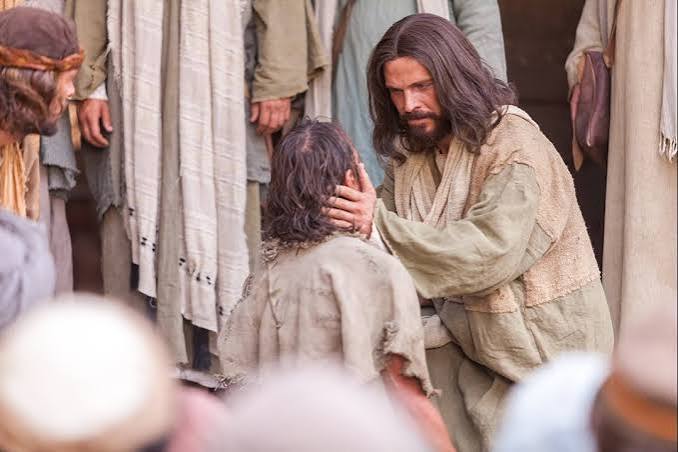
Jesus Himself is recorded as curing many by laying His hands on them—for example, the blind man at Bethsaida and the crippled woman in the synagogue. The newly converted Paul has his sight restored after Ananias lays his hands on him. The other specific practice is found in the Epistle of James (5:14-15): “Is anyone among you sick? Let them call the elders of the church to pray over them and anoint them with oil in the name of the Lord. And the prayer offered in faith will make the sick person well; the Lord will raise them up. If they have sinned, they will be forgiven.”
I will be offering anointing with oil for the sick at the end of this service to anyone who feels in need of it. But I’d also like you to remember all the ways in which our Sunday Eucharist is a healing service every Sunday. Healing comes into our worship at many points: first through the confession, then through our listening to the Word of God, in our intercessions, especially in our reception of the bread and wine at the Eucharist, and finally in the blessing that concludes our service. And I would, BTW, like to remind you that we have a prayer sheet at the door of the church every Sunday, and to encourage you to use it.
Take courage from the words in Luke 4:40, the scene where Jesus heals many at sunset: “He laid His hands on each one and healed them.”
May each one of us be restored to health, salvation, and the blessing of a full life—lived to the glory of God and in service to one another.