
If you look at the top of your pew sheet you will see that today we seem to be celebrating two different things. At the top of the page you can see The Presentation, then – in brackets – Candlemas. So the first thing we need to be clear about is that Candlemas and The Presentation are two different names for the same event; it is similar to the way The Feast of the Nativity and Christmas are two different ways of referring to – and two different ways of looking at – our celebration of Christ’s birth.
So what is it are we celebrating today? The Presentation refers to the events we have heard in our Gospel this morning: forty days after his birth, the infant Jesus is brought into the Jerusalem Temple in the arms of Mary, his mother; Joseph is by their side, carrying two turtle doves in a makeshift cage, and we overhear the whispered, amazed conversations with those venerable elders, first Simeon and then Anna. These figures, who represent the best of the Old Testament Hebrew faith, salute the new, and declare this infant to be their salvation; this child is, in Simeon’s words, “a light for revelation to the Gentiles and for the glory to your people Israel”.
Something else to notice about this Feast of the Presentation is that it forms a hinge between the Old Testament and the New, partly because of its setting, and the presence of pious and prophetic figures of Anna and Simeon, partly because Mary and Joseph have brought Jesus there to fulfill two traditional religious rites – the purification of Mary, and the dedication of Jesus, as a first-born male – but mostly because Jesus’s first entry into the Temple, when he was a forty-day-old baby, is the fulfillment of Malachi’s words in the last book of the Hebrew scriptures: ‘the Lord whom you seek will suddenly come to his Temple’.
These are stirring words from the prophet Malachi, and they are especially stirring to those of us who are familiar with this Old Testament passage from its musical setting in Handel’s Messiah. “Who shall stand when he appeareth?” “For he is like a refiner’s fire”.
These words are not only stirring: they are fierce; they can even be terrifying.
Yet what a contrast there is between Malachi’s prediction and the actual event. Malachi’s prophecy of the Lord, of God himself, coming into his temple in Jerusalem, is all judgment and the threat of destruction; the event that St Luke describes could not be gentler. However, even within today’s Gospel story, with its wonderful complicity between the very old and the very young, with Simeon and Anna seeking, and blessing, and prophesying over the infant Jesus, there is a note of alarm. Every evening, in the Anglican tradition, Simeon’s opening words are repeated: ‘now lettest thy servant depart in peace, for mine eyes have seen they salvation’. What we hear less often are Simeon’s private warnings to Mary, about how this infant is destined for the falling, as well as the rising, of many in Israel, and of the sword that will pierce her own soul. There is plenty of menace there – plenty of ‘fierce’.
So much, then, for the Presentation in the Temple, but what about Candelmas? That’s like my talking about the Nativity and reminding you of the stable in Bethlehem, the shepherds, and the Wise men following their star and then saying, now, what about Christmas? Some of you might start talking about Christmas trees and presents, Santaclaus and mince pies, and even, Vixen, Blixen and Rudolf, but I hope that someone else would interrupt them and remind us that the real point of it all are the events in Bethlehem 2000 years ago, as recounted in the New Testament. The rest are just add-ons.
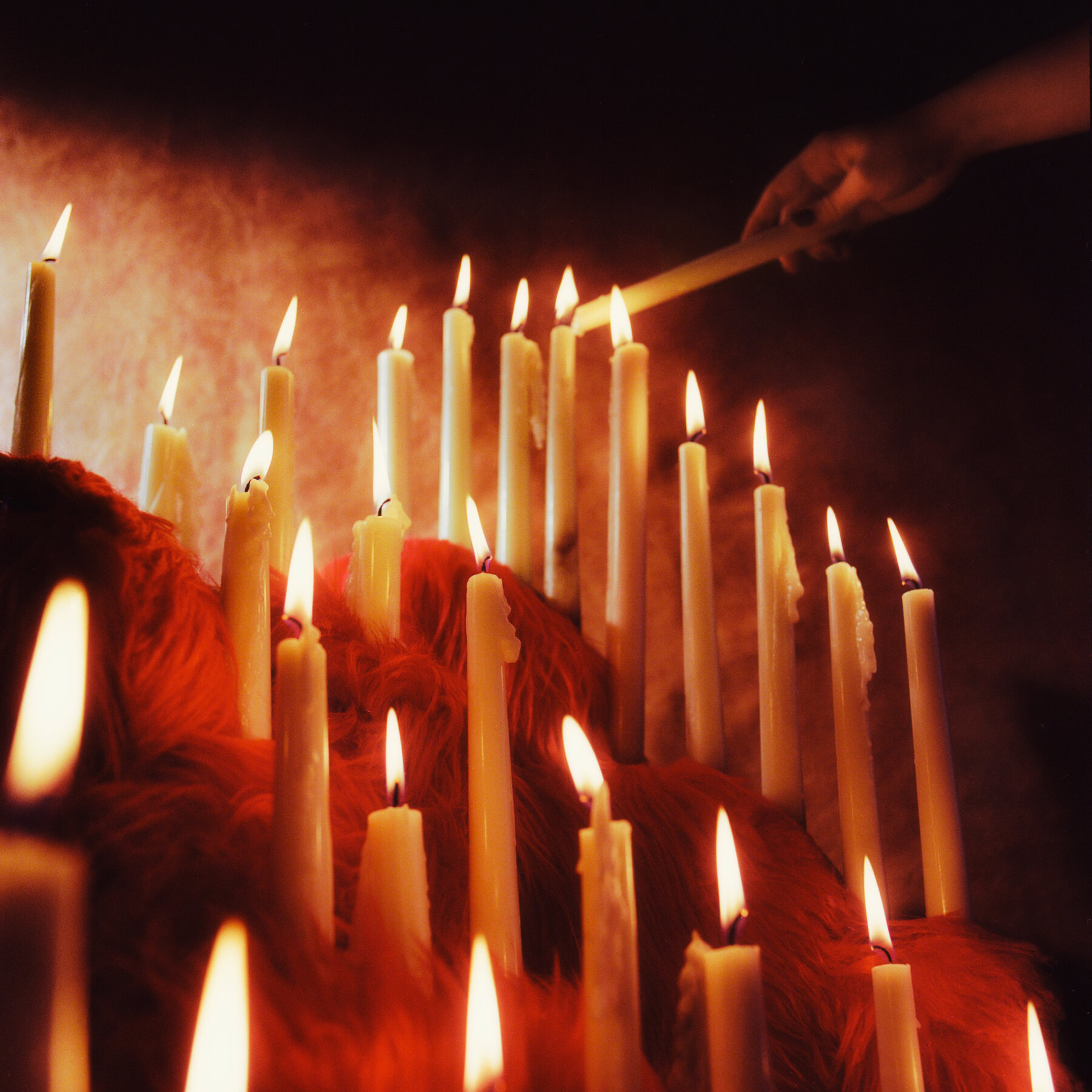
The add-ons of Candlemas are the medieval church’s blessing and distribution of candles that will light the remaining, but ever-shortening, winter nights. The holiday occurs at the halfway point between the winter solstice and the spring equinox and it coincides with the Celtic festival of Imbolc, which in Ireland was marked by the feast of the Saint Bride, or Brigid, on February 1st. What’s more, Candlemas is the very last day when Christians celebrate the mystery of the Incarnation, it book ends the story of the Christ-child coming into the world that runs from Advent, to Christmas, and on through the Epiphany season. Candlemas is the time to put away the last Christmas decoration, and to eat the last slice of panettone, for very soon we must to begin to plan our Lenten disciplines.
As John the Evangelist reminds us ‘in [Christ] was life, and the life was the light of all people’. The whole incarnational story is associated with light, from the first star of Advent, where we began our journey, to the soft glow in the stable at Christmas, until now when we have come to the great dazzle of the blessing of candles – a celebration which we shall be mimicking in a moment with the Candlemas procession that concludes today’s Eucharistic service.
But I want to finish this morning by saying something about candlelight, and to contrast it with the bright electric light of the modern world.
Electric light allows us to see things in clinical detail, it is wonderful for examination, yet it is also a light that is cold and flat; taken outside to light up the night, electricity causes light pollution: it blots out the heavens. Candlelight, on the other hand, is very frail, as anyone who tries walking while holding a candle can tell you: walking by candlelight, like walking by faith, requires attention and concentration. Indeed, candlelight only becomes bright and reliable in community. If you take a candle outside at night you can still see the stars – indeed, the magic of the stars is echoed by the magic of the candle. Both kinds of light, of course, are useful: any young woman going out on a date would want to apply her make-up beneath the one, but dine by the other.
Now here’s the thing: the electric light of the modern world allows us to live hectic, exciting lives twenty-four hours a day, seven days a week; however, to do that, ultimately, is to live a life of constant distraction: it leads not to fulfilment, but to a dislocation from our real selves. A life lit by the candle of faith, on the other hand, suggests a much quieter life, lived on the rim of the vast darkness of eternity; yet by its glimmering light we learn to trust the long shadows that surround our earthly existence, and we learn to trust the God we cannot see. I am sure that this is the sense in which Simeon, when he beheld the infant Jesus, at that age himself little more than a flickering candle of life, could declare that here was “a light for revelation to the Gentiles and for the glory to your people Israel”. Amen.