

[Episcopal News Service] A 17-year-old Episcopalian from Mississippi, who is completing a year of study abroad in Italy, has led an effort at his adopted church in Genoa to preserve the memory of 18 American airmen and 93 Genoese who died 82 years ago in a U.S. bombing mission.
Jack DuPont of Waveland, a small city on the Gulf of Mexico, has been living with host families in Genoa since last September and attending a local school there, an experience sponsored by Rotary International. While immersing himself in Italian culture — he arrived not knowing the language but has picked up enough to communicate — DuPont also began attending worship services at Church of the Holy Ghost, an English-speaking congregation that is part of the Church of England. The church has a range of ministries supporting immigrants and students like DuPont.
“I’ve had an amazing experience,” DuPont, who returns to Mississippi at the end of this month, told Episcopal News Service in a phone interview. “The amount of opportunities that have come from this experience is just unbelievable.”
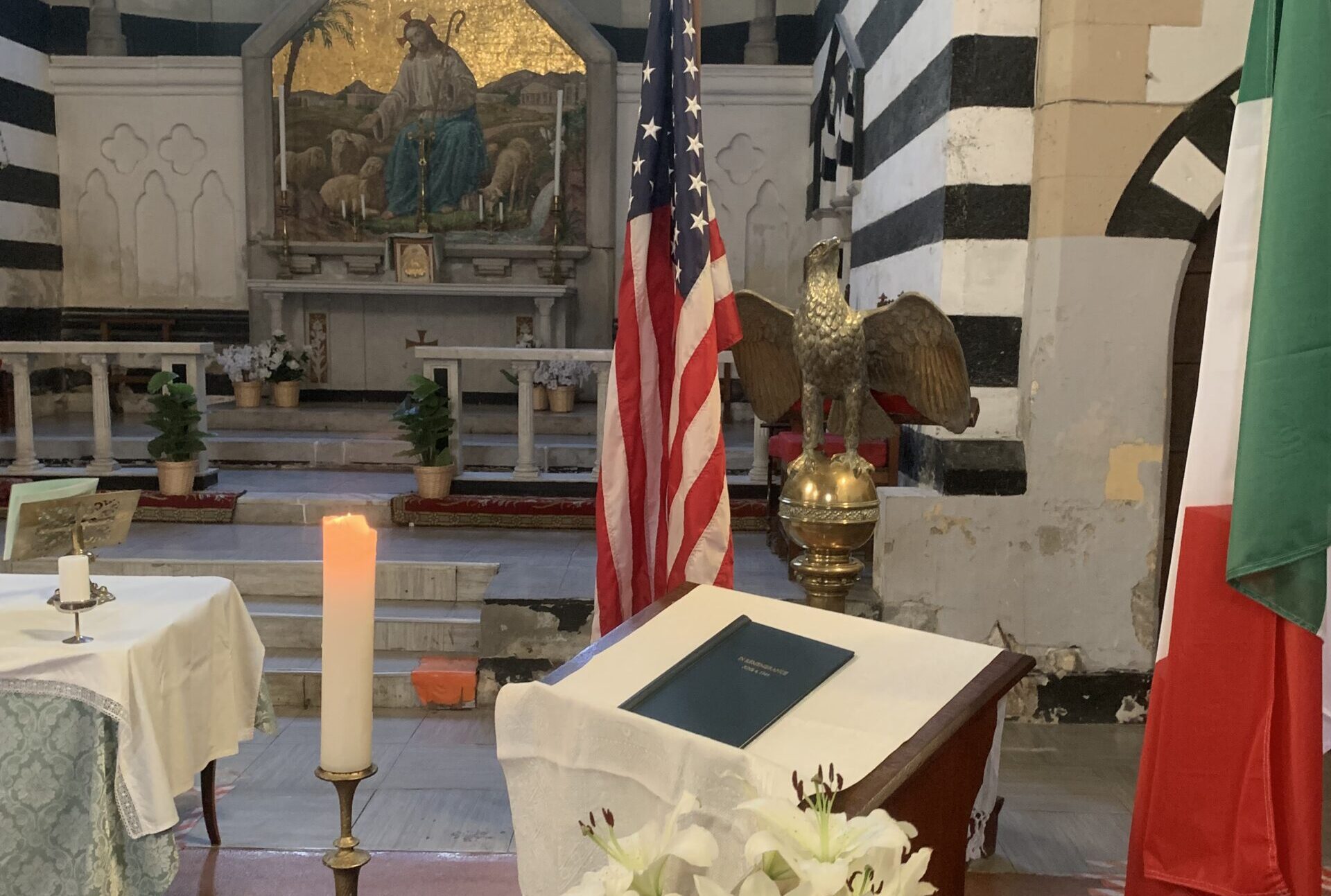
One of those opportunities was the service of remembrance hosted by the Church of the Holy Ghost on June 3. The focal point of the service was a Book of Remembrance that DuPont helped assemble, featuring letters and tributes to those who died in an ill-fated U.S. mission over Genoa on June 4, 1944. DuPont arranged for several Episcopal leaders, as well as elected officials, to contribute written reflections to the book, which also includes photos of many of the people who died and information about their lives.
“We prayed for peace,” DuPont said of the memorial service. “We prayed for those soldiers who did make the ultimate sacrifice for their country. We prayed for the Italian victims and all the victims of the bombings over Genoa during the Second World War.”
Genoa, as an Italian port city and industrial hub, was a frequent target for Allied bombing during World War II. The raid on June 4, 1944, one of dozens, may have been impaired by bad weather, according to DuPont’s research. If rail lines and factories were the mission’s target, many civilians in Genoa were the unintended casualties, and German forces were able to shoot down two of the American planes, killing 18.
The following year, Genoa was liberated from the Germans, not by the Allied forces but by a homegrown resistance movement.
The Rt. Rev. Ann Ritonia, The Episcopal Church’s bishop suffragan for Armed Forces and Federal Ministries, was among those who contributed to the Book of Remembrance.
“We honor their memory best not only through remembrance, but through our renewed commitment to reconciliation, compassion, and justice in a divided world,” Ritonia wrote. “May God grant us the courage to seek peace where there is conflict and to uphold the dignity of every human life.”
DuPont said he was inspired to develop this project by the upcoming 250th anniversary of the signing of the Declaration of Independence in the United States. The purpose of the Genoa memorial service and the Book of Remembrance, however, was not to glorify one nation’s war dead, but to acknowledge the human cost of war and pray for a better future.
“The main message was that of peace, which is something that in our world today we cannot remind each other enough of,” he said.
– David Paulsen is a senior reporter and editor for Episcopal News Service based in Wisconsin. He can be reached at dpaulsen@episcopalchurch.org.